
Pecan Grove Previous Residents by Era
A useful house-history file begins with an era table. The newer source establishes the current parcel identity, then earlier records move the trail backward. Pecan Grove development began in the 1970s, so a nineteenth-century Fort Bend instrument can describe the land that later became part of the community without naming a modern Pecan Grove address. The sources below do not form one continuous roster. They provide dated evidence with different coverage, roles, and access methods.
| Source | Years it covers | Where held | What it shows |
|---|---|---|---|
| FBCAD parcel account | Current appraisal record | FBCAD public search | Owner, situs, mailing address, legal description, parcel identifiers |
| Official Public Records | County description: 1821 to present; Records Division: 1838 to present | County Clerk online, counter, mail | Recorded transfers, parties, dates, instruments, plats, legal descriptions |
| Fort Bend deed index and deed microfilm | Index 1837-1897; deeds 1838-1886 | Texas State Library guide and George Memorial | Older grantor, grantee, volume, page, and land trail |
| Rosenberg-Richmond directories | Verified 1962, 1982, and 1986 volumes | Texas State Library holdings; ask George Memorial | Historical name and address leads when included |
| Federal census | Public releases through 1950 | National Archives and library databases | Household context for earlier Fort Bend geography |
| District Clerk historical indexes | 1821-1980 | Historic online collection and appointment room | Civil, criminal, family index and minute-book leads |
The county's two online-description dates reflect record-series or platform scope. Keep both in the research log and verify the image or original volume rather than treating either as a universal start date. For a modern house, the first meaningful Pecan Grove-era trail normally begins with land, plats, MUD records, and later subdivision evidence.
Start a Pecan Grove Address History
Fort Bend Central Appraisal District Property Search supplies the present-day anchor. Search by street number and street name, owner, Quick Ref ID, Geographic ID, subdivision, neighborhood, property type, or tax year. Record the owner of record, owner mailing address, situs, legal description, account or geographic ID, subdivision, lot or block, tax year, and any exemption or limitation shown. The strongest link from a modern card to an older deed is usually the legal description, not the street number.
The FBCAD mailing address is correspondence information. It may identify an individual, trust, estate representative, office, or another destination. The situs identifies where the land and building sit. Keep those facts separate. A homestead or other appraisal notation can be a clue about the property record, but it is not a complete list of people connected to a home. Use the Fort Bend GIS parcel, subdivision, plat, and MUD layers to confirm that the current card refers to the intended tract.
For a Pecan Grove property, section, block, lot, and subdivision terms can also appear in the public POA covenant search. They can help translate an address to a plat, but the County Clerk record and FBCAD account remain the official cross-checks.
Trace Pecan Grove Previous Residents
The County Clerk's Official Public Records search is the core backward trail for an address. It searches Party Name, Grantor, Grantee, Date Filed, Instrument Number, and Document Type. The instructions specify LASTNAME FIRSTNAME. A street address is not a dependable direct deed key, which is why the current FBCAD legal description comes first. Search the current owner as grantee, use an approximate purchase date and deed-related type where helpful, then inspect the likely instrument for its prior grantor and land description.
- Copy the current FBCAD owner, situs, legal description, subdivision, lot or block, and Quick Ref or Geographic ID.
- Search that owner as a grantee in Official Public Records and open the likely acquisition record.
- Record the instrument number, recording date, document type, grantor, grantee, and legal description.
- Search the seller or grantor as a prior grantee, using the land description to separate people with similar names.
- Repeat the cycle, checking plats, easements, deed-of-trust releases, liens, probate, trusts, estates, and name variants when the chain changes form.
- Move to deed books or microfilm for an earlier series, and note an image gap instead of treating it as proof that no transfer occurred.
- Grantor
- The party who conveys or transfers an interest in the recorded instrument.
- Grantee
- The party receiving that recorded interest. A prior grantee search can expose the earlier acquisition.
- Chain of title
- The sequence of recorded transfers that connects one owner of a parcel to an earlier owner.
- Legal description
- The lot, block, subdivision, abstract, or metes-and-bounds description that identifies land when a street address changes or is absent.
Open the County Clerk Official Public Records hub before beginning the Pecan Grove previous residents deed search.
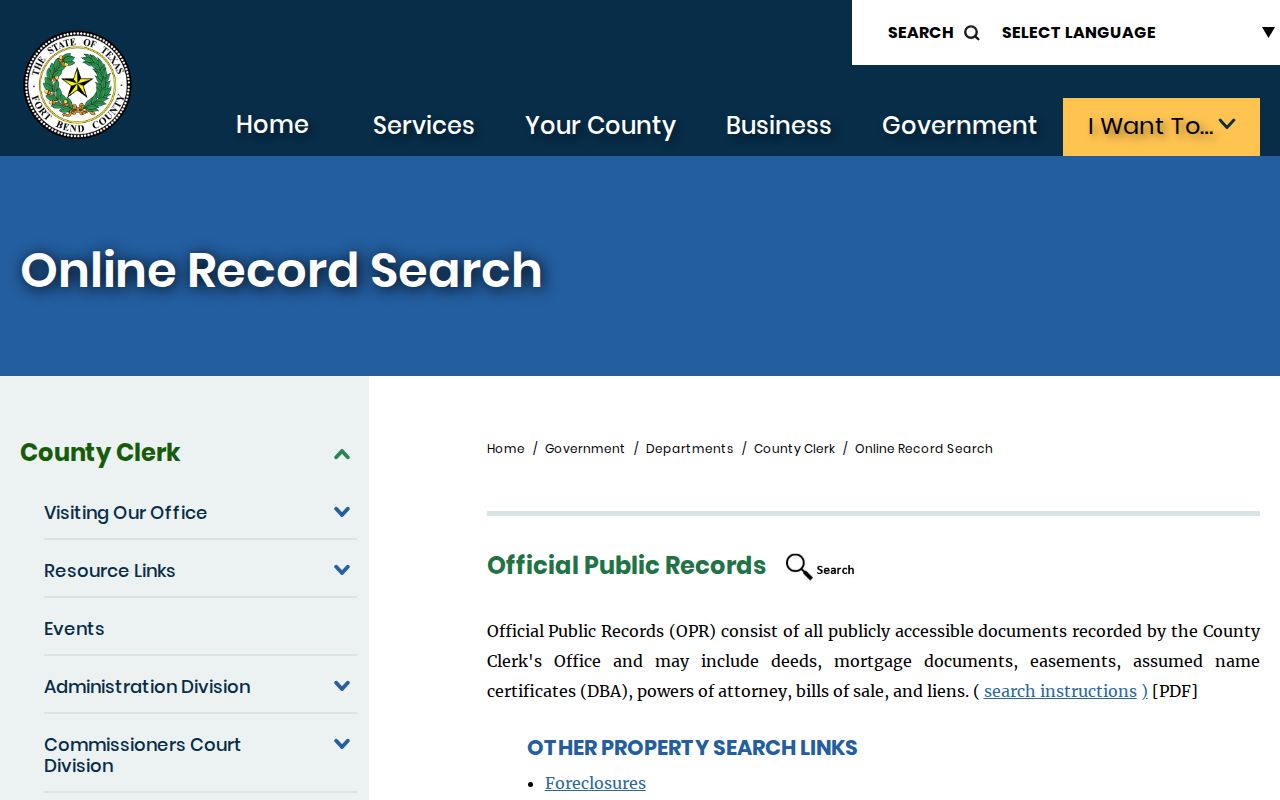
Instrument numbers, parties, dates, and legal descriptions turn a broad name search into a parcel-specific sequence.
The online image is not the final official copy. The Clerk offers online clean-copy ordering, Richmond counter service, mail requests, phone or email help, and written Texas Public Information Act requests for identifiable records not found online. The counter is at 301 Jackson Street in Richmond; mail requests use the County Clerk address at 301 Jackson Street, Suite 101, Richmond, TX 77469. Include the instrument number, desired copy type, and return information. Staff can explain records procedures but do not conduct legal research.
Read Pecan Grove Deed Microfilm Gaps
The Texas State Library Fort Bend microfilm guide gives a precise fallback when an older recorded trail is not visible online: deeds for 1838-1886, a deed index for 1837-1897, probate for 1838-1877, tax rolls for 1838-1910, district minutes for 1838-1903, and a WPA naturalization index for 1854-1929. George Memorial, Fort Bend's Regional Historical Resource Depository, provides the local research setting with non-circulating materials and microfilm readers.
Two film notes matter in a backward chain. Deed Record volume D pages 1-48 are missing. Volume F pages 271-290 appear twice, with the second version described as a clearer transcription. Mark the volume, pages, reel, and result of each check. A missing page can explain why an otherwise logical chain breaks, while the duplicate pages offer a second reading rather than two separate transactions.
Review the Fort Bend microfilm coverage before asking for an older Pecan Grove previous residents record.
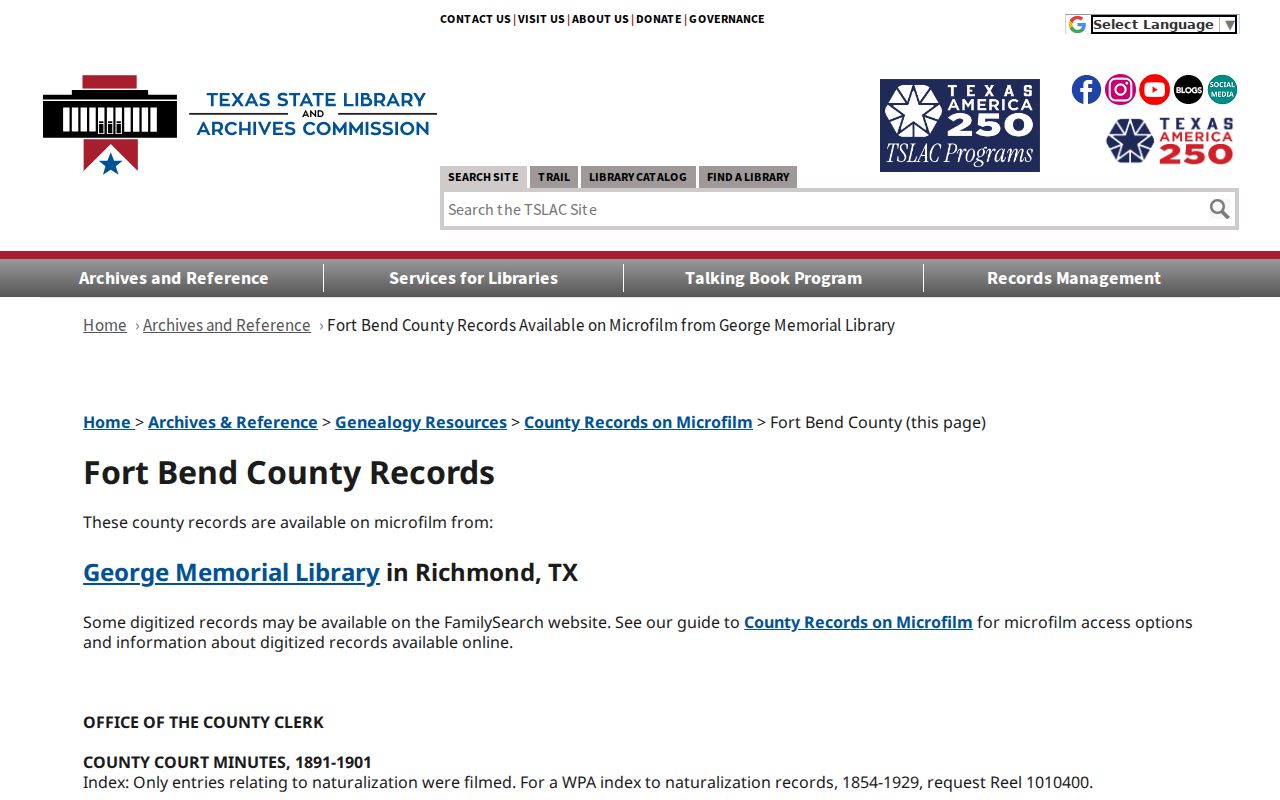
The guide gives record-series ranges that help select the right reel or book instead of relying on a general claim that old records exist.
Check Pecan Grove Historic Court Indexes
Deeds tell only part of a house history. The Fort Bend District Clerk maintains historic criminal, civil, and family index and minute-book access for 1821-1980, with an appointment-based historical documents room as another channel. County Clerk historical probate volumes also reach 1838-1956 through volumes A-Z and 1-30 with index volumes 1-3. Estate, guardian, or court material can connect a recorded transfer to an administrator, heir, or legal event, but public availability varies and protected material remains unavailable.
Use the District Clerk historical records route when a Pecan Grove address trail reaches an older name or file.
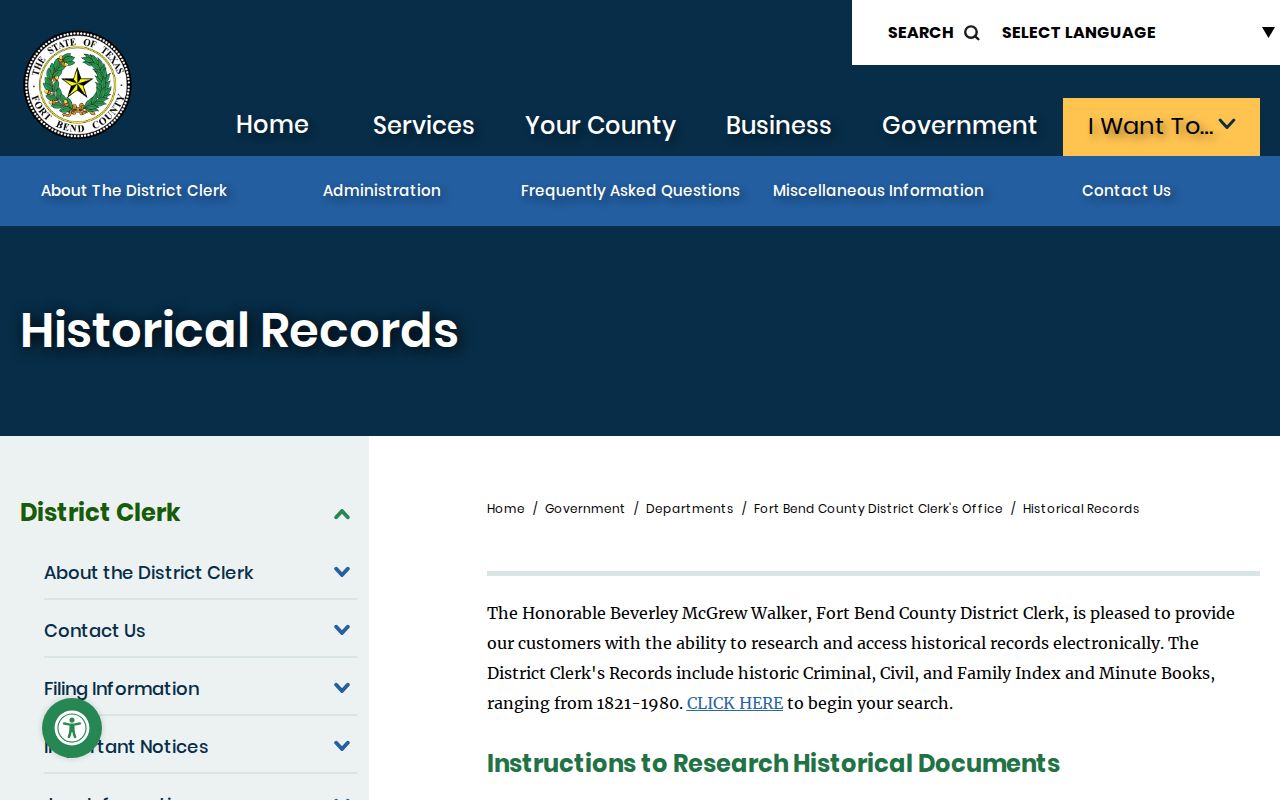
The historic index helps locate a series or minute book, but a listed party or court event is not by itself proof of a person's residence at the address.
Pair Pecan Grove Past Households
Ownership records do not always identify who lived at an address between transfers. For that household layer, ask George Memorial for Rosenberg-Richmond directories from 1962, 1982, and 1986, plus any available reverse, criss-cross, telephone, or suburban volumes. The official sources did not verify a continuous Pecan Grove run or a local reverse-directory year list. Search street number and name, Richmond or Rosenberg labels, abbreviated forms, surname variants, and both spouses' initials where a volume supports them.
Federal census records are publicly released through 1950. They help with earlier Fort Bend and Richmond geography, but they do not fill the 1980s gap around the verified directory volumes. Pecan Grove's planned development began in the 1970s. Do not place a modern subdivision address into the 1962 book or assume that the 1899 Richmond Sanborn map depicts a later Pecan Grove tract. The historical collections are covered more fully on the Pecan Grove city directory page.
- Anchor the address to a dated deed, tax roll, or appraisal record and record the legal description.
- Check the closest verified directory volume by name, then request available reverse or telephone material by address.
- Pair an early household lead with the nearest available census release, while using deeds, tax rolls, probate, newspapers, and permits around later gaps.
- Compare names, spouse references, initials, obituary details, and the same legal land description before assigning a person to the house.
A directory entry is a historical lead. It can omit a person because of timing, spelling, coverage, or subscription choices. Confirm it with an independent dated record before treating it as a firm household conclusion.
Bridge Pecan Grove Previous Residents ZIPs
Historical Pecan Grove address work should test Richmond labels and more than one ZIP. USPS realigned Richmond deliveries on July 1, 2008, moving 9,723 deliveries from 77469 to 77406 and 7,848 to new 77407. An older deed, directory, tax entry, or newspaper item may therefore show 77469 even if a current address lookup returns 77406 or 77407. The Census associates Pecan Grove with 77406 and 77407, but it does not establish the delivery ZIP for every house.
GIS gives a second check because its address points and boundary layers distinguish postal city, ZIP, city limits, ETJs, subdivisions, parcels, and MUDs. Richmond can be a postal label for an unincorporated Pecan Grove property. Test the older ZIP, the current ZIP, and the legal description before deciding that an address record belongs to a different place.
Find Pecan Grove Previous Residents Endpoints
When an owner dies or an estate changes hands, probate and obituary materials can close a backward trail. Search the decedent, spouse, and estate in County Clerk probate sources, then compare public heir or administrator filings with later deeds. George Memorial's Burial Records database and the Fort Bend Historical Commission burial-name index can provide a death or family lead. A vital certificate has different access rules, so an index or obituary is not a substitute for one.
This approach is useful for family history and heir research because the estate connection begins with the decedent and a documented parcel, not an attempt to track a living person. A grantor might have sold a house and remained nearby, and an estate representative may not have lived at the property. Record the person role beside every name: owner, grantor, grantee, heir, administrator, directory listing, or other associated evidence.
Note: A dated deed and legal description provide stronger address evidence than a name alone in an obituary or directory.
Respect Pecan Grove Previous Residents Limits
Past residents research can document a house history, but it cannot reconstruct a complete private household file. Appraisal cards name an owner of record, not every occupant. A deed documents a transfer, not every person who stayed at the address. Directory coverage is incomplete, voter addresses can be protected, driver-license data is restricted, and utility or delivery records are not an open source for household history. Absence from a result is not proof that a person never lived there.
Use precise requests when a public record is needed: address, subdivision or lot, date range, record series, and known instrument or owner name. Fort Bend custodians can provide a non-exempt record, redact protected material, or explain that no record exists. Preserve the source date and the exact search terms so another researcher can distinguish an unsearched source from a documented gap.
Lawful house history. Pecan Grove research supports family history, estate questions, and property history. Never use a historical address trail to stalk, harass, intimidate, or harm any living person.